Gurugram, IndiaDelhi NCR
An hour a day, lying down.Nothing touches you.
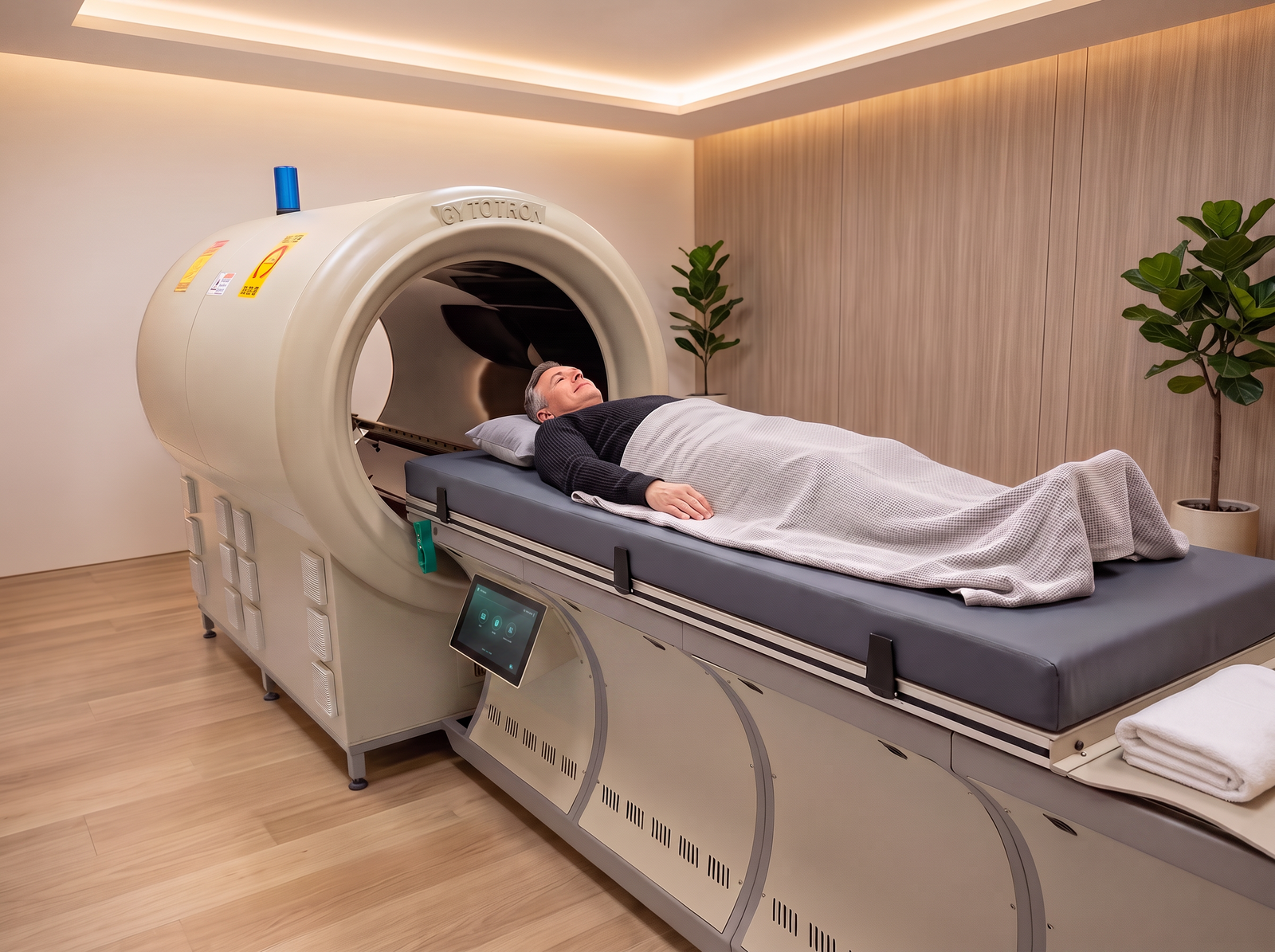
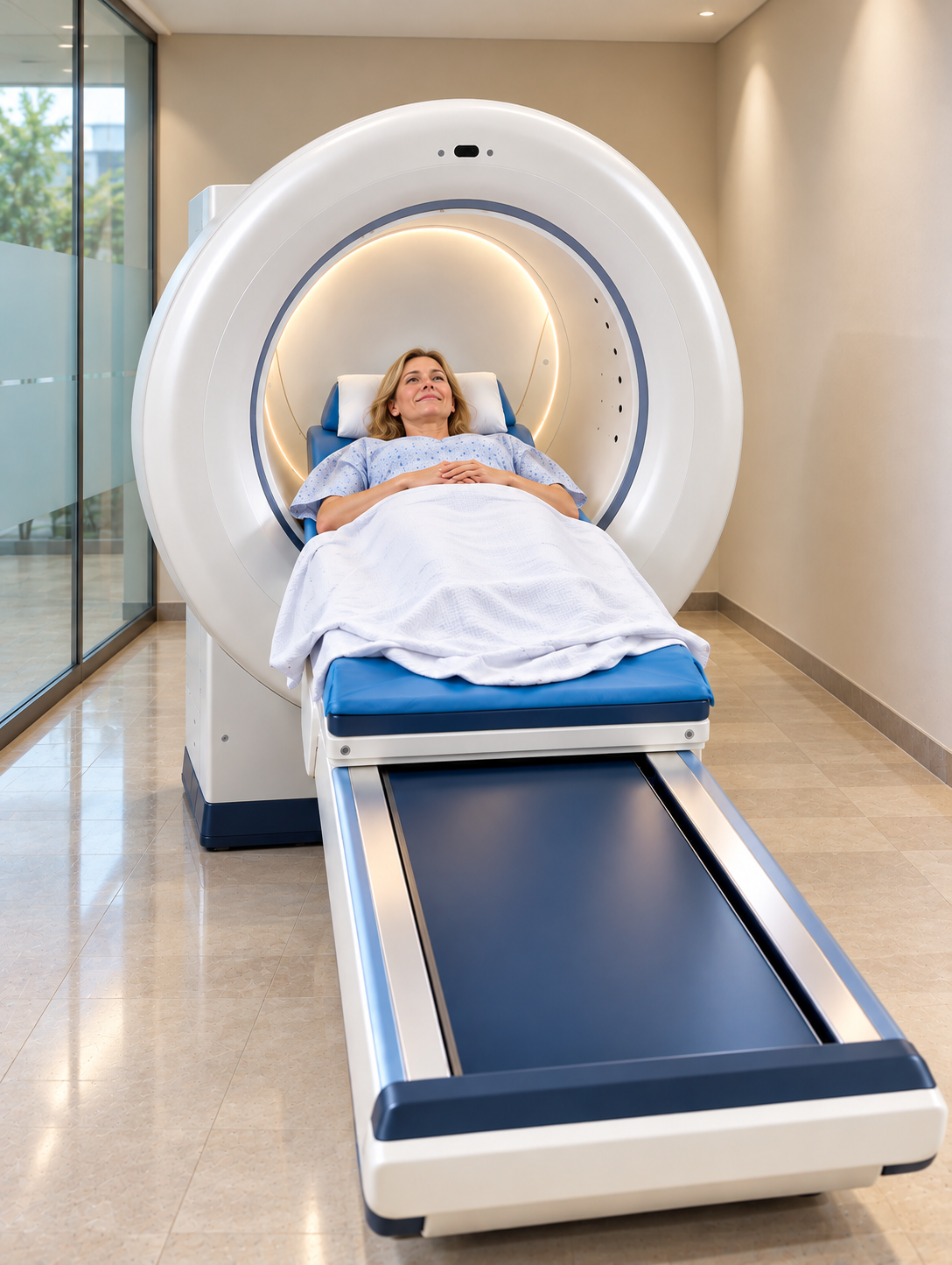
Cytotron® therapy sends finely tuned, low-energy radio-frequency beams (RFQMR) at the area shown on your own scans. No needles, no drug, no radiation dose. It is neither radiotherapy nor chemotherapy — usually 28 daily sessions, planned into the treatment plan you are already on, in an order we work out with you and your oncologist.
Families come to us from across North India and from abroad; we're minutes from Delhi international airport and help with visa letters, pickup and a place to stay. Most people find a page like this on someone else's behalf. Send the reports and let a doctor tell you honestly whether it's worth the journey.
- No charge
- A doctor reads every file personally. No obligation after.
- With your oncologist
- We write to them and plan the sequencing together.
- Plainly
- We say so when we don't think this will help you.
Send your reports
Three short steps. A doctor reads your file properly and replies within one working day — no charge, no obligation.
- 1About you
- 2The diagnosis
- 3Your reports
Step 1 of 3 — About you
- No charge
- Reply in 1 working day
- Seen only by our clinicians
Prefer to skip the form? Message us on WhatsApp. For anything urgent, please ring your treating hospital. More ways to reach us.
1 hour
A session, once a day. You lie down fully clothed and nothing touches you.
2012
CE marked in the European Union, and in clinical use there ever since.
2019
Granted US FDA Breakthrough Device Designation for breast, liver and pancreatic cancers.
9
Countries where the Cytotron® is in clinical use today.
What actually happens
An hour, lying down, fully clothed.
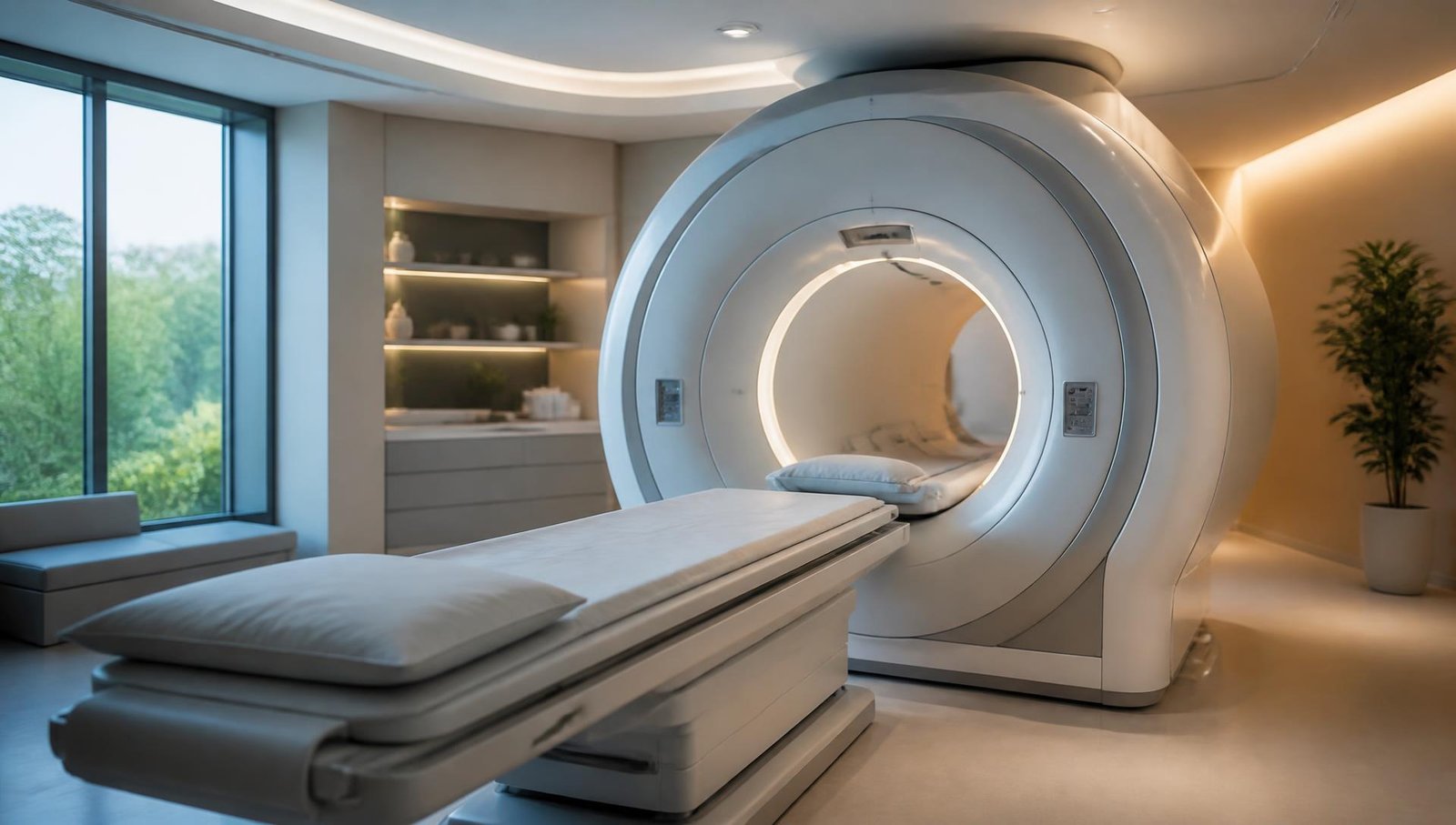
The Cytotron® is a machine you lie inside. It sends gentle radio-frequency and magnetic signals to an area mapped from your own scans.
Nothing touches you. Nothing is injected. No needles, no anaesthetic, and most people feel absolutely nothing while it runs.
Bring headphones. Patients read, listen to music, call their sister, or sleep. A fair number of ours sleep. Afterwards you stand up and go home — you can drive yourself and go to work.
The signals sit at the gentle, non-ionising end of the spectrum, below the frequency of the phone you're probably reading this on. It is a very different thing from a CT scan or radiotherapy.
If you are the one making the calls
Most people who write to us are not the patient.
They are a daughter with a folder of scans on her phone. A husband who has read too much at two in the morning. A son in another country trying to arrange something useful from a distance.
You do not need to understand the technology before you contact us, and you do not need a decision ready. Send what you have. We will read it, tell you honestly whether this is worth considering for your family member, and say so just as plainly if it is not.
If it is easier to talk than to type, call us. A person answers — not a form, not a call centre.
What we will and will not do
- We will read the whole file before we say anything about it.
- We will tell you when we do not think this will help.
- We will speak to your oncologist, not around them.
- We will never ask you to stop the treatment you are already on.
- We will not chase you, and we will not rush you.
In their own words
We would rather show you real families than stock photographs.
We are putting together short interviews and written accounts from patients and families who have been through a course here — in their own words, with their written consent, and with nothing edited out of the difficult parts. They will appear here as they are ready.
If you are a former patient and would like to share your experience, we would be glad to hear from you.
Talk to usThe science, in plain language
Why a radio-frequency field can matter to a tumour cell.
Every cell in your body holds a small voltage across its outer membrane. A healthy, resting cell holds that charge steadily. A rapidly dividing tumour cell does not — its membrane voltage collapses towards zero.
Cytotron® therapy (RFQMR — Rotational Field Quantum Magnetic Resonance) directs low-energy, non-ionising radio-frequency pulses at the targeted area. The pulse pattern is computed from your own scans. The design intention is to nudge that collapsed voltage back towards the polarised, resting state — the signal that tells a cell to stop dividing.
It is not radiotherapy and not chemotherapy: nothing is cut, nothing radioactive is used, and no drug is given. You feel nothing during the hour you lie on the couch. How fully this mechanism explains what doctors observe in clinic is still being researched, and we say so plainly rather than promising more than the evidence supports.
See the full explanation
Dr Vaibhav Awasthi
Founder, Viraaka Healthcare
A note from our founder
Why we opened this centre.
Families here were being asked to move cities for an hour of treatment a day. Some could. Most could not.
The ones who went were away from the oncologist who had looked after them for two years. The ones who stayed spent months wondering whether they'd let something slip past. Neither is a fair position to put a family in, and it had very little to do with medicine.
Launch task: replace this paragraph with your own reason — the specific patient, the specific phone call, the specific moment you decided to do this. Two or three true sentences here will do more for a worried reader than everything else on this page combined.
What I can promise you is this. We will read your file properly before we say anything about it. We will tell you when we think this will help, and just as plainly when we think it will not. We will talk to your oncologist rather than around them. And nobody here will ever rush you into a decision, because that is not how anyone should be choosing cancer treatment.
Dr Vaibhav Awasthi
How we work
The machine is one part of it.
Cancer treatment is hard on a body in ways that have nothing to do with the tumour. People lose weight they can't afford to lose, stop sleeping, get weaker, and then tolerate their chemotherapy less well. That part of care is unglamorous and very often left out. We build it into every course at no extra cost.
We start by reading your file: the pathology, the scans, what you've already been through and your latest bloods. We go through all of it properly before we give an opinion on anything.
With your permission, we then write to your oncologist, tell them what we found, and agree the order of things with them rather than working around them. While you're with us, we also look after nutrition, strength, sleep and side effects, and the emotional weight of it all, for you and for whoever is carrying it with you.
At a point we agree with you in advance, there's a scan. We read it together, whatever it shows.
Conditions
Cancers we treat
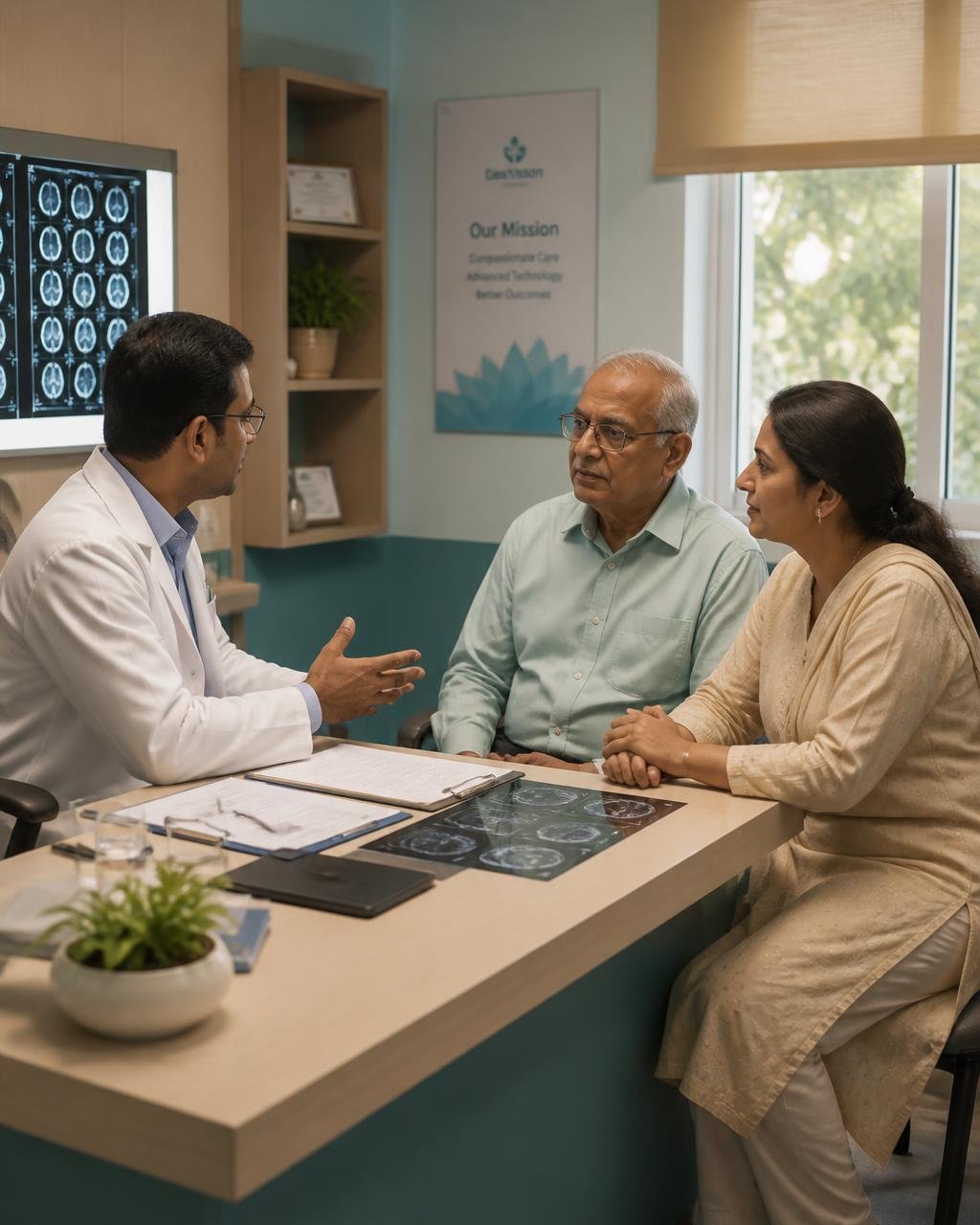
Cytotron® therapy is used for solid tumours. Breast, liver and pancreatic cancers carry the device's FDA Breakthrough Device Designation, and we see brain tumours and a range of other solid cancers too.
Breast cancer
Planned into your wider treatment plan, with the sequencing agreed case by case.FDA-designated
Liver cancer
Planned around resection, TACE, ablation and systemic therapy. Recent liver bloods guide the timing.FDA-designated
Pancreatic cancer
Planned into your wider care, with real attention to pain, appetite, weight and energy.FDA-designated
Brain tumours
A registered international study covers compassionate treatment in children. We see adults too.Registered study
Other solid tumours
Prostate, colorectal, lung, head and neck. We'll be specific about your case, not general.Emerging use
Not sure whether yours is on this list?
Send the reports anyway. It takes us a day to read them and tell you either way, and it costs you nothing to find out.
Send your reportsRecognition
Recognised well beyond India.
CE marked in the European Union since 2012, and approved for clinical use in Saudi Arabia and Mexico. In 2019 the US FDA granted it Breakthrough Device Designation for breast, liver and pancreatic cancers — a status reserved for devices addressing serious conditions that may offer a meaningful advantage over what's available now.
Its use in cancer has been reported in a published, peer-reviewed trial of 98 patients (set out below). The research is still developing, and we'd rather walk you through exactly where it stands than have you piece it together from a forum at midnight.
Published clinical research
The Cytotron Trial: 98 patients, followed for a year
Every person in this trial had an advanced solid tumour and had been told by their oncologist that no further standard treatment was available. Each received one hour of Cytotron therapy a day for 28 days; 86 completed the full course.
Kumar et al., Journal of Clinical & Experimental Oncology, 2016. One study, without a randomised control group — results are not a promise for any individual.
- 47%
- still alive twelve months after treatment
- 40 of 86. None had been expected to reach twelve months.
- 375 days
- median survival after treatment
- Against 76 days in a comparison group of similar patients.
- 78%
- stable or shrinking disease a month later
- 40 of the 51 patients who had a follow-up scan.
- 0
- stopped treatment because of a side effect
- Over 2,400 sessions, no severe adverse effect recorded.
Step by step
How it works from here
The first two steps cost nothing, and you can stop after either of them.
Send your reportsFree
Pathology, your most recent scan, a treatment summary and your medicines. A WhatsApp photo of each page is fine.
A doctor reads themFree
Properly, not a glance. Within a working day you'll hear whether we think this suits your situation — and when we think it won't.
We meet
In Gurugram, India, or by video call. We map the target area from your scans and give you a written plan with a fixed cost. Then you take it home.
Your course begins
An hour a day, sequenced into the rest of your treatment so your main treatment always comes first.
We look at a scan together
At a point agreed in advance, so the goalposts cannot move. We read it with you, whatever it shows.

Getting here
Close enough to fit around an ordinary week.
We're in Gurugram, India, minutes from Delhi's international airport — so families across Delhi NCR can come daily without uprooting anyone, and patients from further afield can reach us easily.
Coming from outside India? We start with your reports and a video consultation, so you know where you stand before booking a flight. We provide the supporting documents for India's medical visa and keep a list of comfortable longer-stay accommodation nearby.
Talk to usLet's start with your reports.
Not a sales call. A doctor reads your file and tells you what they honestly think — including when they think this isn't the right thing for you.
- Pathology or biopsy report
- Most recent scan (CT, MRI or PET-CT)
- Treatment summary from your oncologist
- Your current medicines and recent bloods
Send whatever you have — we'll tell you if anything else would help.
Send your reports
Three short steps. A doctor reads your file properly and replies within one working day — no charge, no obligation.
- 1About you
- 2The diagnosis
- 3Your reports
Step 1 of 3 — About you
- No charge
- Reply in 1 working day
- Seen only by our clinicians
Prefer to skip the form? Message us on WhatsApp. For anything urgent, please ring your treating hospital. More ways to reach us.